


Base Oil
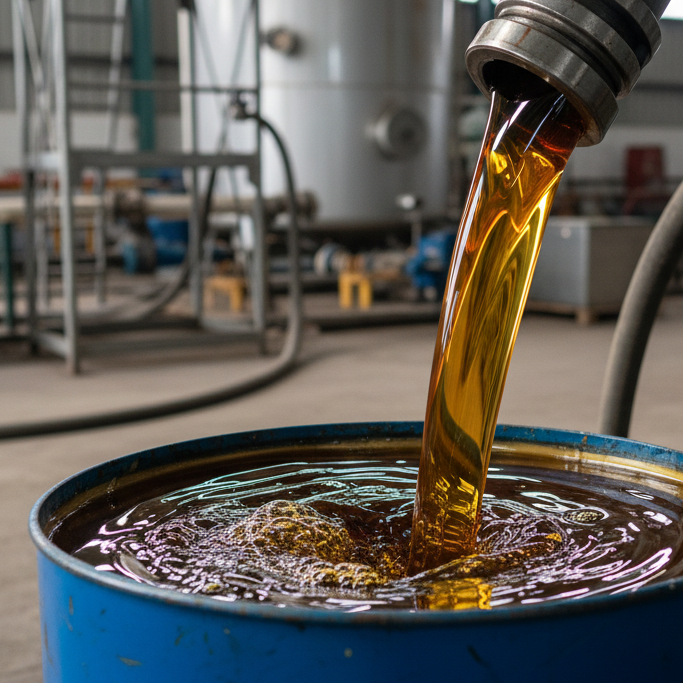
Base oil is the fundamental component of lubricants, acting as the carrier fluid for additives and determining a lubricant’s core properties like viscosity and stability. It is produced by refining crude oil or through chemical synthesis, with mineral-based options coming from crude oil and synthetic options from chemical processes. Base oils are categorized into American Petroleum Institute (API) groups based on their processing and purity, influencing the final lubricant’s performance in various applications, such as engine oils, greases, and industrial fluids.
The Role of Base Oil
Carrier Fluid:
Base oil serves as the primary liquid component of a lubricant, holding the added chemicals in place.
Property Definition:
It significantly influences the lubricant’s viscosity, stability, thermal resistance, and load-bearing capacity.
Formulation:
Different applications require varying types and quantities of base oils, along with additives, to meet specific performance needs.
How Base Oils Are Made:
Mineral Base Oils: Crude oil is heated, separating it into different distillates. The heavier fractions, with specific boiling point ranges, are refined to create base oils.
Synthetic Base Oils: These are created through chemical synthesis and offer superior performance characteristics compared to mineral oils.
Bio-based Sources: Base oils can also be derived from biological sources.
American Petroleum Institute (API) Classification
The American Petroleum Institute (API) classifies base oils into five groups based on their refining process and purity:
Group I
Standard mineral base oils.
Application:
Industrial Lubricant, Grease, Metal working, Heavy duty machine lubricant and other industrial who need basic performance
| Products | KV 40 Degree | KV 100 Degree |
|---|---|---|
| Group 1 | 22-27 Cst | 4-5 Cst |
| Group 1 | 43-46 Cst | 6-7 Cst |
| Group 1 | 486-500 Cst | 32-33 Cst |
| Group 1 | 30-32 Cst | 4-5 Cst |
| Group 1 | 90-100 Cst | 6-7 Cst |
Group II
Higher purity than Group I, with lower levels of sulfur and aromatics.
Application:
Automotive Lubricant, Metal working, Industrial Lubricant, and others industrial who need more performance.
| Products | KV 40 Degree | KV 100 Degree |
|---|---|---|
| Group 2 | 30-32 Cst | 4-5 Cst |
| Group 2 | 90-100 Cst | 6-7 Cst |
| Group 2 | 486-500 Cst | 32-33 Cst |
| Group 2 | 10-12 Cst | 2-3 Cst |
| Group 2 | 6-7 Cst | 2-2,5 Cst |
Group III
Highly refined mineral oils that can be considered synthetic.
Application:
Automotive Lubricant, and other industrial who need high performance especially for Synthetic Oil.
| Products | KV 40 Degree | KV 100 Degree |
|---|---|---|
| Group 3 | 43 Cst | 7 Cst |
| Group 3 | 20 Cst | 4 Cst |
| Group 3 | 9 Cst | 2 Cst |
| Group 3 | 15 Cst | 3 Cst |
Group IV
Synthetic base oils, such as polyalphaolefins (PAOs).
Application:
Automotive Lubricant, Industrial Lubricant, Heavy Duty Machine Lubricant, Mining Lubricant, And Other Industrial who need more performance than group 3, especially for fully Synthetic Oil
| Products | KV 40 Degree | KV 100 Degree |
|---|---|---|
| Group 4 | 17 Cst | 4 Cst |
| Group 4 | 31 Cst | 6 Cst |
| Group 4 | 47 Cst | 8 Cst |
| Group 4 | 600 Cst | 65 Cst |
Group V
A catch-all for other types, including silicone oils, esters, and vegetable oils.
Application:
Automotive Lubricant with specialty performance, Turbine Oil, Aircraft Machine Oil, and other industrial who need specialty or extreme performance.
| Products | KV 40 Degree | KV 100 Degree |
|---|---|---|
| Group 5 | 46 Cst | 9 Cst |
| Group 5 | 68 Cst | 10 Cst |
| Group 5 | 680 Cst | 65 Cst |
Solvent

A solvent is a substance (usually a liquid) that dissolves another substance (the solute) to form a uniform mixture called a solution, without changing its own chemical nature. Water is the most common solvent, known as the universal solvent, but solvents can also be gases or solids, and are crucial in industry for paints, cleaners, and pharmaceuticals, though many pose safety risks.
Solvent Characteristic:
- Dissolves Solutes: It breaks down other substances (solutes) into their individual molecules or ions.
- Forms Solutions: Creates a homogeneous mixture where the solute is evenly dispersed.
- States of Matter: While often liquid (like water), solvents can also be gases (like nitrogen in air) or solids (like copper in brass).
- Polarity: Classified as polar (like water, dissolves salts/sugars) or nonpolar (like oil, dissolves fats/grease).
Examples and Application of Solvent:
- Water: Dissolves salt, sugar, and many other substances (polar).
- Organic Solvents: Acetone, ethanol, toluene used in paints, glues, and cleaning.
- Industrial Uses: Manufacturing, dry cleaning, extraction, and pharmaceuticals.
Additive
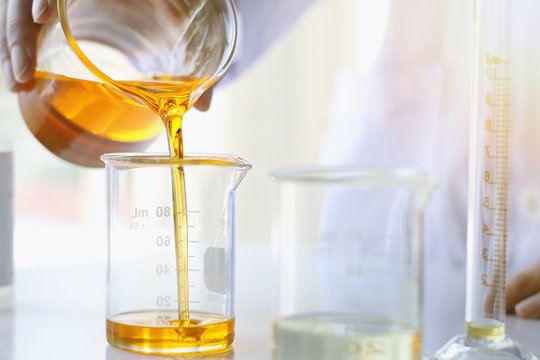
In chemistry, an additive is a substance intentionally mixed in small amounts with another material (like food, fuel, plastic, or paint) to enhance, modify, or improve specific properties, performance, shelf-life, or appearance, acting as a performance booster or functional ingredient without being the main component. Additives can make products last longer, improve texture, add color, boost engine efficiency (like in gasoline), or prevent spoilage
How They Work
- Modify properties: They alter the chemical or physical state of the base product, like making plastic tougher or paint more durable.
- Enhance function: In fuels, octane boosters improve engine performance, while detergents clean fuel injectors.
- Improve stability: Antioxidants prevent fuel degradation, and preservatives (like salt or sulfites in food) stop microbial growth.
- Aesthetic appeal: Colorants give vibrancy to foods, plastics, or inks.
Examples Across Industries
- Food: Preservatives (sodium benzoate), sweeteners, flavor enhancers, colors, emulsifiers (xanthan gum).
- Fuel: Octane boosters, detergents, antioxidants, cold flow improvers.
- Plastics & Materials: UV stabilizers, flame retardants, plasticizers, colorants.
- Lubricants: Anti-wear agents, corrosion inhibitors, viscosity modifiers.